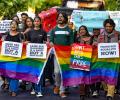
A five-judge bench of the Supreme Court will consider review pleas challenging the October 2023 verdict that declined legal sanction to same-sex marriage. The review pleas will be heard in chambers on January 9, with Justice P S Narasimha being the only member of the original bench that delivered the verdict.

The Supreme Court said on Monday it will have to constitute a bench to hear a plea against the collegium system of appointment of judges to the apex court and high courts.
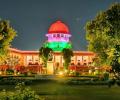
The collegium said the Chief Justice of the Delhi high court, in consultation with his two senior-most colleagues, had on May 30 recommended the elevation of the judicial officers as judges of that high court.

The Supreme Court of India has ruled that it is mandatory to consider the twin conditions laid out in the Prevention of Money Laundering Act (PMLA) when deciding bail applications in money laundering cases. The court emphasized the seriousness of the crime and the need to comply with the rigorous requirements of Section 45 of the PMLA, which includes giving the prosecutor an opportunity to oppose bail and ensuring that the court is satisfied that there are reasonable grounds to believe the accused is not guilty and unlikely to commit another offense on bail. The ruling was made in response to an appeal filed by the Enforcement Directorate against a Patna High Court order granting bail to an accused in a money laundering case. The Supreme Court found that the High Court had granted bail without properly considering the requirements of Section 45 and remanded the case back for a fresh review.

The illegal step by the government has tarnished the apex court's sanctity, according to retired Justice Tariq Mahmood.
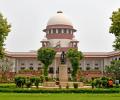
A five-judge bench of the apex court chaired by Chief Justice D Y Chandrachud sat on a holiday to address the dispute where a defiant judge overruled an order of a division bench that had quashed his direction for a CBI probe and asked the central agency to go ahead with the investigation.

What is the independence of the judiciary if independent and fearless judges are not being appointed, SC judge Rohinton Fali Nariman said.

It was brought to the Lower House again on Friday with the amendments approved by the Rajya Sabha, including the change of title from 2015 to 2016.
Justice P Sathasivam, who will take over as the Chief Justice of India on Friday, started his academic life in a Tamil medium school. Coming from a family of farmers, his rise to the top judicial job in the country has been inspiring, reports A Ganesh Nadar from the judge's village

The Supreme Court on Wednesday came down heavily on Manipur high court judge Justice MV Muralidaran, saying despite being granted an opportunity he did not correct his judgment on grant of quota to the majority Meiteis in the strife-torn state.
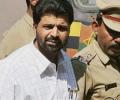
The Supreme Court has referred to a larger bench the plea of Yakub Abdul Razak Memon seeking a stay of his scheduled execution on July 30 in the 1993 Mumbai blasts case.

The Supreme Court has criticized the selective publication of a preliminary report on the Air India crash, calling it 'unfortunate and irresponsible'. The court raised concerns about privacy, dignity of victims' families, and the potential for biased narratives.

The Aligarh Muslim University's minority status issue will have to wait to reach a logical end after the Supreme Court majority verdict on Friday asked a regular bench to decide the issue.
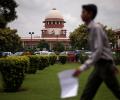
The Supreme Court on Monday flagged the issue of "pick and choose" by the Centre in clearing the collegium's recommendations for transferring high court judges and said this does not send a good signal.

Justice Gangopadhyay said that he will abide by the SC's order. He maintained that everybody has to abide by the Supreme Court's directions and as part of the high court judiciary, he will also do the same.
Supreme Court Judge Justice M R Shah was being airlifted to Delhi after falling sick in Himachal Pradesh on Thursday, according to sources.

The Supreme Court has put on hold the Uttar Pradesh government's plan to develop the Shri Banke Bihari Temple Corridor in Vrindavan, citing a lack of consultation with key stakeholders. The court questioned the state's approach and the urgency of enacting an ordinance to take over the temple's management.
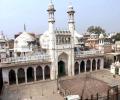
The Archeological Survey of India (ASI) on Wednesday urged a Varanasi court not to make its Gyanvapi mosque complex survey report public for at least four more weeks, according to the lawyer for the Hindu side.
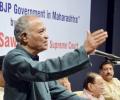
Former Supreme Court judge P B Sawant died due to cardiac arrest at his residence in Pune in Maharashtra on Monday morning, family sources said. He was 90.
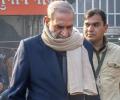
Sajjan Kumar is currently lodged in Tihar jail.

'Justice B V Nagarathna has excellent human qualities and is a stickler for the law.'
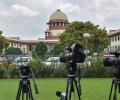
After Parliament's nod, SC's sanctioned strength will go up to 33, plus the CJI.

The Supreme Court on Tuesday came down heavily on the Karnataka government over actor Kamal Haasan's film "Thug Life" not being released in the state, saying mob and vigilantes cannot be allowed to take to the streets.

The extensive campaigning tours and related events undertaken by Delhi Chief Minister Arvind Kejriwal indicate that he does not appear to be suffering from any serious or 'life threatening' ailment, a Delhi court has held while denying him interim bail.
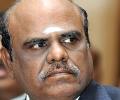
Justice Karnan said the eight judges have "jointly committed the offences punishable under the SC/ST Atrocities Act of 1989 and amended Act of 2015.

The SCBA said it unanimously opposes the proposed museum in the high security zone and pressed the demand for a library and a cafe cum lounge.

President Ram Nath Kovind has signed the warrants of their appointment including that of Justice B V Nagarathna, who is in line to become the first woman CJI in September 2027.

People sitting in responsible positions have to think before saying anything, whether it will benefit the country or not

A two-judge bench of the top court in 1981 questioned the correctness of the 1967 verdict holding Aligarh Muslim University not to be a minority institution since it was created by a central law and referred the issue to a larger bench for decision.
The Supreme Court has ruled that a Governor cannot send bills to the President for consideration if the state assembly has already cleared them for a second time. The court was questioning the Centre over the powers of the Governor when it comes to granting assent to bills.
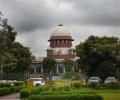
The Supreme Court of India has sought the government's response on a Public Interest Litigation (PIL) that challenges the appointment process of the Comptroller and Auditor General of India (CAG), arguing it's unconstitutional. The PIL, filed by the Centre for Public Interest Litigation, claims the current process, solely through executive appointment by the Prime Minister, undermines the CAG's independence and violates constitutional principles. The court, while acknowledging the importance of institutional trust, questioned the extent to which it should intervene in the appointment process and whether this would constitute rewriting constitutional provisions. The PIL suggests the CAG's appointment should be similar to other independent bodies, with a selection committee comprising the Prime Minister, Leader of the Opposition, and Chief Justice of India. The case has implications for the independence and transparency of India's audit system.
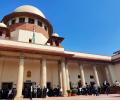
In an unprecedented verdict, the top court said the criminal jurisprudence required courts to apply judicial mind to the facts of a case before granting police custody if it was "genuinely required".

According to the CJI, once someone has a sense of faith in his/her intentions and abilities, it is easier not to obsess over outcomes but to value the process and the journey towards those outcomes.
Chief Justice of India Ranjan Gogoi will administer the oath of office to the two judges on Friday, an official circular said.
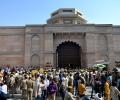
The Supreme Court of India is scheduled to hear a batch of petitions challenging the validity of certain provisions of the Places of Worship (Special Provisions) Act, 1991, which prohibits lawsuits to reclaim a place of worship or change its character from what prevailed on August 15, 1947. The pleas, including one filed by Ashwini Upadhyay, argue that these provisions violate the right to judicial remedy and create an arbitrary cut-off date. The matter will be heard in the backdrop of several ongoing cases related to places of worship, including the Gyanvapi Mosque in Varanasi and the Shahi Idgah Mosque in Mathura. The Muslim side has cited the 1991 law to argue that such suits are not maintainable. The Supreme Court had previously sought the Centre's response to Upadhyay's petition, which alleged that the law creates an "arbitrary and irrational retrospective cut-off date" for maintaining the character of places of worship.
"Today, I am quiet because the attorney general has sought a very short time, next time I will not be quiet. Use your good office to see these issues are resolved," Justice Sanjay Kishan Kaul told Attorney General R Venkataramani. "I thought of saying a lot, but since the attorney general is only seeking seven days time, I'm holding myself," said Justice Kaul, whose bench also comprised Sudhanshu Dhulia, after Venkataramani sought a week's time to come back with instructions on the pending recommendations for judges' appointment to the high court.
The Supreme Court declined to examine a plea challenging a PMLA provision, stating the issue lies in the law's abuse, not the law itself. The court allowed the petitioner to approach the High Court if procedures weren't followed.

"I am not a person to retire and I am going to start a new inning of my life. I am praying to the almighty God to give me strength and courage and good health to play the new inning," said Justice Shah.

The United States Senate took the historic decision by 53-47 votes after three Republican Senators Susan Collins, Lisa Murkowski and Mitt Romney voted in her favour along with 50 members of the ruling Democratic Party.
The Supreme Court of India has ruled that maternity leave is a fundamental right and cannot be denied to a woman based on the number of children she has from previous relationships. The court overturned a Madras High Court decision that had denied maternity leave to a Tamil Nadu government school teacher who had two children from a previous marriage. The Supreme Court emphasized the importance of reproductive rights, including maternity benefits, as part of international human rights law. The court also highlighted the right to life under Article 21 of the Indian Constitution, which includes the right to health, dignity, and reproductive choice. The decision has significant implications for women's rights and reproductive healthcare in India.
 © 2026 Rediff.com - Advertise with us - Disclaimer - Privacy Policy - Sitemap - Feedback - About us - Terms of use - Grievances